


Quantum’s Strategic Convergence: Military Dominance, GPU Fusion & European Cloud Signal Computing’s New Era
🎯 TL;DR – Three Quantum Shifts Redefine the Field
- Military Prioritization: Pentagon elevates quantum to one of six Critical Technology Areas in “Quantum and Battlefield Information Dominance” (Q-BID) strategy—focusing on jam-resistant communications and GPS-independent navigation for contested battlefields
- Hybrid Computing Infrastructure: NVIDIA’s NVQLink adopted by 15+ supercomputing centers globally, connecting quantum processors with GPUs via 400 Gb/s throughput and <4μs latency—Quantinuum demonstrates 32× faster error correction using CUDA-Q
- European Cloud Deployment: OVHcloud launches continent’s first Quantum-as-a-Service platform with Pasqal’s 100-qubit neutral-atom Orion Beta QPU, planning eight more QPUs by 2027 to establish quantum sovereignty alternative to U.S.-China ecosystems
- Strategic Signal: These developments demonstrate quantum computing transitioning from research to strategic infrastructure—military necessity, industrial-scale hybrid systems, and sovereign cloud platforms replace laboratory demonstrations
Three announcements spanning November 17-18, 2025, mark a decisive shift in quantum computing’s trajectory: the Pentagon’s elevation of quantum technology to core military strategy, NVIDIA’s integration of quantum ai processors with GPU supercomputing at global research centers, and Europe’s launch of its first sovereign Quantum-as-a-Service cloud. Viewed together, they reveal quantum computing transitioning from speculative R&D to strategic necessity—no longer “if” but “who controls it” and “how quickly can it deploy.”
Unlike previous milestones focused on qubit counts or algorithmic speedups, this week’s developments address quantum’s role in geopolitical competition (Pentagon prioritization), practical usefulness (hybrid quantum-GPU workflows), and digital sovereignty (European cloud alternative). The convergence suggests 2025 as the inflection point where quantum moves from physics labs to strategy rooms, data centers, and battlefield command systems.
🎖️ Pentagon’s Quantum Battlefield: From Research to Military Imperative
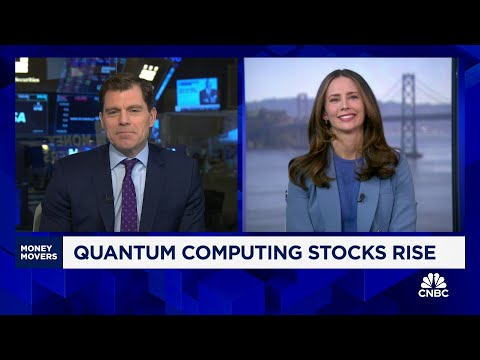
CNBC explores quantum computing as the next technology battlefield—now central to Pentagon strategy
Six Critical Technology Areas: Quantum Takes Center Stage
On November 17, 2025, U.S. Under Secretary of War for Research and Engineering Emil Michael announced a sweeping reorganization of the Pentagon’s technology priorities, narrowing focus from 14 modernization categories to six Critical Technology Areas designed to deliver “immediate, tangible results to the warfighter.” The new framework places quantum technology alongside artificial intelligence, hypersonics, directed energy, biomanufacturing, and contested logistics—signaling quantum’s transition from experimental curiosity to operational necessity.
The quantum-focused category, Quantum and Battlefield Information Dominance (Q-BID), targets vulnerabilities in modern military communications and navigation that adversaries increasingly exploit through electronic warfare. Pentagon officials have warned for over a decade that GPS satellites and traditional radio signals—cornerstones of U.S. military coordination—are susceptible to jamming, spoofing, and cyberattacks. Q-BID aims to build quantum-enhanced alternatives that physics makes fundamentally harder to disrupt.
“Our adversaries are moving fast, but we will move faster. The warfighter is not asking for results tomorrow; they need them today. These six Critical Technology Areas are not just priorities; they are imperatives.” — Under Secretary Emil Michael
What Quantum and Battlefield Information Dominance Entails
Q-BID encompasses two quantum technology tracks:
- Quantum communications: Leveraging quantum key distribution (QKD) and entanglement-based protocols to create theoretically unhackable communication channels. Unlike classical encryption vulnerable to computational attacks (especially from future quantum computers), quantum communication detects eavesdropping through fundamental physics—any measurement of quantum states disturbs them, alerting legitimate users.
- Quantum sensors: Using atom interferometry and other quantum measurement techniques to achieve navigation accuracy without GPS satellites. Quantum accelerometers and gyroscopes measure inertial motion with precision unattainable by classical MEMS devices, enabling aircraft, submarines, and ground vehicles to maintain position awareness even when satellite signals are jammed or denied.
Pentagon’s Strategic Repositioning
The narrowing from 14 to 6 technology priorities reflects a shift from broad research sponsorship to focused capability development. Previous Pentagon technology strategies spread funding across biotechnology, microelectronics, advanced materials, space systems, and numerous other domains. The new six-category framework concentrates resources on technologies deemed essential for near-term military advantage.
The six Critical Technology Areas are:
- Applied Artificial Intelligence: Office automation to battlefield decision aids, aligned with White House AI Action Plan framing U.S.-China competition
- Quantum and Battlefield Information Dominance (Q-BID): Secure communications and GPS-independent navigation through quantum sensors
- Biomanufacturing: Rapid production of pharmaceuticals, fuels, and materials through synthetic biology
- Contested Logistics Technologies: Supply chain resilience in environments where adversaries target logistical networks
- Scaled Directed Energy (SCADE): High-energy lasers and microwave systems for missile defense and drone interception
- Scaled Hypersonics (SHY): Mach 5+ weapons for long-range strike and rapid-response capabilities
Geopolitical Context: Quantum as Strategic Competition
The Pentagon’s quantum prioritization mirrors international trends. China designated quantum information science as a national strategic priority, investing billions through its 2021-2025 Five-Year Plan. The European Union’s Quantum Flagship program has committed €1 billion over ten years. The United States previously pursued quantum R&D through the National Quantum Initiative Act (2018), but elevating quantum to one of six military technology imperatives signals a shift from research to weaponization—from “interesting physics” to “battlefield advantage.”
🖥️ NVIDIA NVQLink: Quantum-GPU Supercomputing Goes Global
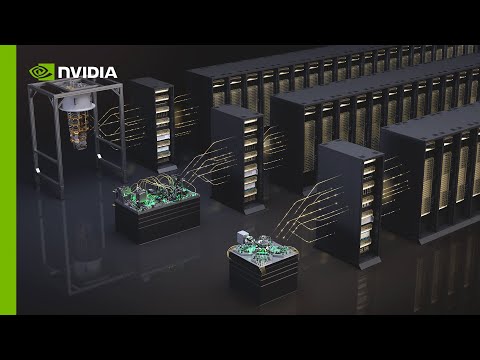
NVIDIA introduces NVQLink—connecting quantum processors with GPU supercomputing for hybrid workflows
The Hybrid Quantum-Classical Imperative
While the Pentagon focuses on quantum’s military applications, NVIDIA announced November 17, 2025 that 15+ supercomputing centers globally have adopted NVQLink, a first-of-its-kind universal interconnect linking quantum processors (QPUs) with GPU-accelerated classical computing. The initiative addresses a fundamental quantum computing challenge: even with thousands of error-corrected qubits, practical applications require tight integration with classical computers for circuit compilation, error syndrome decoding, and result post-processing.
NVQLink provides:
- 400 Gb/s throughput: High-bandwidth data exchange between quantum and classical systems
- <4 microsecond latency: Near-real-time communication enabling feedback loops for error correction
- 40 petaflops AI performance: FP4 precision for quantum circuit optimization and error decoding
- CUDA-Q integration: Unified programming model for hybrid quantum-GPU applications
“In the future, supercomputers will be quantum-GPU systems — combining the unique strengths of each: the quantum computer’s ability to simulate nature and the GPU’s programmability and massive parallelism. NVQLink with CUDA-Q is the gateway to that future.” — Jensen Huang, NVIDIA CEO
Global Adoption: Asia, Europe, Middle East, United States
The breadth of NVQLink adoption signals quantum computing’s transition from boutique research projects to supercomputing center infrastructure. Participating institutions span:
| Region | Institution | Country |
|---|---|---|
| Asia-Pacific | G-QuAT (AIST) | Japan |
| KISTI | South Korea | |
| NCHC | Taiwan | |
| National Quantum Computing Hub (A*STAR IHPC, CQT, NSCC) | Singapore | |
| Pawsey Supercomputing Research Centre | Australia | |
| Europe & Middle East | CINECA | Italy |
| DCAI (AI Supercomputer Operator) | Denmark | |
| IT4Innovations (IT4I) | Czech Republic | |
| Jülich Supercomputing Centre (JSC) | Germany | |
| Poznań Supercomputing and Networking Center (PCSS) | Poland | |
| Technology Innovation Institute (TII) | UAE | |
| King Abdullah University of Science and Technology (KAUST) | Saudi Arabia | |
| United States | Brookhaven National Laboratory | USA |
| Fermi National Accelerator Laboratory | USA | |
| Lawrence Berkeley National Laboratory | USA | |
| Los Alamos National Laboratory | USA | |
| MIT Lincoln Laboratory | USA | |
| National Energy Research Scientific Computing Center (NERSC) | USA | |
| Oak Ridge National Laboratory | USA | |
| Pacific Northwest National Laboratory | USA | |
| Sandia National Laboratories | USA |
Real-World Impact: Quantinuum’s Error Correction Breakthrough
Quantinuum provided the first demonstration of NVQLink’s practical value. Using their Helios quantum processor integrated with NVIDIA GPUs via NVQLink, they achieved:
- 67 microsecond decoder reaction time for quantum error correction—32× faster than Helios’ 2-millisecond requirement
- World’s first real-time qLDPC decoder for quasi-low-density parity-check error correction codes
- Active error correction protecting quantum information from noise during computation
CUDA-Q: Unified Programming for Hybrid Systems
NVQLink’s hardware interconnect pairs with CUDA-Q, NVIDIA’s software platform for hybrid quantum-classical applications. CUDA-Q allows developers to:
- Write quantum algorithms alongside classical GPU code in a single programming environment
- Simulate quantum circuits on GPUs before running on real quantum hardware
- Implement custom error correction decoders exploiting GPU parallelism
- Orchestrate complex workflows mixing quantum subroutines with classical pre/post-processing
The standardized API abstracts hardware differences—developers write CUDA-Q code that runs across different quantum processor types (superconducting, trapped ion, neutral atom, photonic) connected via NVQLink. This contrasts with previous quantum computing models requiring vendor-specific SDKs and manual integration of classical support systems.
🇪🇺 Europe’s Quantum Cloud: OVHcloud Launches Sovereign QaaS Platform

Pasqal’s quantum computing technology—now accessible via OVHcloud’s European Quantum-as-a-Service platform
First European Quantum-as-a-Service: Digital Sovereignty in Action
While NVIDIA focuses on hybrid computing infrastructure, OVHcloud announced November 17, 2025 the launch of Europe’s first Quantum-as-a-Service (QaaS) platform, providing cloud access to real quantum computers starting with Pasqal’s Orion Beta QPU—a 100-qubit neutral-atom system. The platform positions OVHcloud as Europe’s answer to quantum cloud offerings from AWS (Amazon Braket), Microsoft (Azure Quantum), and IBM Quantum Network—all U.S.-based providers.
The launch advances European quantum sovereignty, a strategic priority following concerns about digital dependency on U.S. and Chinese technology ecosystems. By hosting quantum hardware in European data centers operated by a European cloud provider, OVHcloud offers EU businesses and research institutions quantum computing access without data crossing Atlantic or Pacific cables—addressing regulatory compliance (GDPR), intellectual property protection, and supply chain resilience.
“Making our quantum processing unit available on OVHcloud represents a major step toward European digital sovereignty. It ensures that quantum computing, from hardware to cloud infrastructure, can be developed, deployed, and operated entirely within Europe.” — Loïc Henriet, CEO of Pasqal
The Platform: Emulators, QPUs, and European Supply Chain
OVHcloud’s Quantum Platform offers a two-tier approach:
- Quantum emulators (9 available): Software simulators running on classical hardware, enabling algorithm development and testing without QPU access costs. Emulators represent different quantum computing models (gate-based, annealing, analog simulation), allowing users to experiment with various approaches before committing to specific hardware.
- Real quantum processors (starting with Pasqal Orion Beta): Access to 100-qubit neutral-atom quantum computer for production workloads, research experiments, and algorithm validation requiring actual quantum effects (entanglement, superposition) that emulators cannot replicate.
Pasqal’s Neutral-Atom Technology
Pasqal’s Orion Beta QPU uses neutral rubidium or cesium atoms as qubits, trapped and manipulated by laser beams in configurable 2D or 3D arrays. Key advantages of neutral-atom quantum computing include:
- Scalability: Hundreds of atoms can be trapped simultaneously using optical tweezers, providing qubit counts exceeding superconducting or trapped-ion systems
- Long coherence times: Neutral atoms exhibit coherence times of seconds (vs. microseconds for superconducting qubits), enabling longer computations before quantum information decays
- Flexible connectivity: Programmable laser control allows arbitrary qubit connectivity patterns, unlike fixed couplings in superconducting architectures
- Analog quantum simulation: Direct Hamiltonian evolution enabling simulation of quantum many-body physics without gate decomposition overhead
Pasqal targets optimization problems (logistics, scheduling, portfolio management) and quantum simulation applications (materials discovery, drug design, chemical reactions) where neutral-atom advantages align with problem structure.
European Quantum Ecosystem Context
OVHcloud’s QaaS launch fits within broader European quantum strategy:
- EU Quantum Flagship (2018-2028): €1 billion research program funding quantum technologies across communications, computing, simulation, and sensing
- European Quantum Communication Infrastructure (EuroQCI): Pan-European quantum key distribution network for secure government and critical infrastructure communications
- National quantum programs: France (€1.8B through 2025), Germany (€2B through 2025), Netherlands, UK investing billions in quantum R&D
- Quantum startups: Pasqal, Quandela (photonic QC), IQM (superconducting), Quantum Motion (silicon spin qubits), Alpine Quantum Technologies (trapped ions) forming European hardware ecosystem
🔗 Strategic Convergence: What These Three Developments Reveal
Quantum as Geopolitical Infrastructure
The Pentagon, NVIDIA, and OVHcloud announcements share a common thread: quantum computing transitioning from research to strategic infrastructure governed by national security and economic competition considerations. This represents a fundamental shift from the 2010s narrative of quantum as pure science toward quantum as strategic asset comparable to semiconductors, telecommunications networks, or space systems.
Three-Layer Strategic Stack
Together, the announcements form a three-layer quantum computing stack:
Implications for 2026-2030
Projecting forward from this week’s announcements:
- Quantum as dual-use technology: Military applications drive near-term funding and deployment, civilian applications follow. Historical parallel: semiconductors advanced by Cold War defense spending before enabling consumer electronics.
- Hybrid architectures as standard: NVQLink’s adoption by 15+ supercomputing centers establishes hybrid quantum-GPU systems as default infrastructure, not experimental setups. Future quantum computers will ship with classical co-processors and standardized interconnects.
- Multi-polar quantum ecosystem: OVHcloud’s European platform breaks U.S.-China quantum computing duopoly. Expect additional sovereign quantum clouds: Japan (G-QuAT), South Korea (KISTI), Singapore, UAE. Quantum fragmentation along geopolitical lines mirrors internet Balkanization trends.
- Error correction milestone approaching: Quantinuum’s 67μs decoder reaction time (32× faster than required) suggests quantum error correction transitioning from research milestone to engineering practice. Fault-tolerant quantum computing—long-promised “5-10 years away”—may actually arrive by decade’s end.
🚀 Bottom Line
November 17-18, 2025’s quantum computing announcements—Pentagon’s Q-BID strategy, NVIDIA’s NVQLink global adoption, and OVHcloud’s European QaaS platform—collectively demonstrate the field’s transition from speculative R&D to strategic infrastructure. Quantum is no longer solely a physics problem but a geopolitical, economic, and military priority demanding national strategies, hybrid computing architectures, and sovereign technology platforms.
The question shifts from “when will quantum computing work?” to “who will control it, where will it run, and what problems will it solve first?” The answers emerging this week suggest: (1) military applications lead commercial deployment, (2) quantum-GPU hybrid systems become computing’s new architecture, and (3) quantum infrastructure fragments along sovereignty lines. Quantum computing’s “research era” is ending; its “strategic era” has begun.
🤖 AI-Powered Quantum Analysis: Prompts for Deeper Exploration
“Assess the Pentagon’s Q-BID strategy for quantum communications and sensors. Which technologies are deployment-ready (TRL 7-9) versus experimental (TRL 1-4)? Estimate realistic timelines for quantum GPS alternatives, secure battlefield communications, and quantum radar systems reaching operational status. Compare to historical military technology adoption curves (stealth, GPS, precision weapons).”
“Analyze NVIDIA NVQLink’s cost-benefit for supercomputing centers. What is the capital expenditure for integrating a quantum processor (QPU acquisition, cooling infrastructure, NVQLink hardware) versus marginal compute value gained? Calculate break-even points for different application domains (drug discovery, materials simulation, optimization). How does hybrid architecture TCO compare to pure classical or pure quantum approaches?”
“Evaluate OVHcloud’s QaaS strategy for achieving European digital sovereignty in quantum computing. Assess: (1) Can Europe develop competitive quantum hardware ecosystem (Pasqal, Quandela, IQM vs. IBM, Google, IonQ)? (2) Will data residency requirements drive European customers to OVHcloud despite potentially inferior performance/cost? (3) How sustainable is multi-vendor QPU strategy (8+ suppliers by 2027) given quantum hardware consolidation trends?”
“Based on Quantinuum’s 67μs decoder reaction time achievement using NVQLink, extrapolate error correction scaling limits. At what qubit count does classical decoder processing become bottleneck? Model: decoder computational complexity vs. syndrome data volume vs. GPU throughput. Estimate maximum logical qubit count supportable by NVQLink architecture before requiring distributed classical processing.”
“Develop three scenarios for quantum computing ecosystem evolution 2025-2035: (1) Globalized: Open standards (NVQLink), cross-border quantum clouds, international collaboration. (2) Tri-polar: U.S. (AWS/Azure/IBM), China (national quantum cloud), Europe (OVHcloud) spheres with limited interoperability. (3) Fragmented: Proliferation of national quantum programs, export controls, technology decoupling. Assess likelihood, drivers, consequences for quantum computing progress.”
❓ Frequently Asked Questions
🔗 Sources and Further Reading
- The Quantum Insider: Pentagon Elevates Quantum Tech to Core of Future Battlefield Strategy
- U.S. Department of War: Under Secretary Emil Michael Announces Six Critical Technology Areas
- Breaking Defense: Pentagon CTO Announces Top Six Tech Priorities
- The Quantum Insider: Supercomputing Centers to Integrate Quantum Processors Using NVIDIA’s NVQLink
- NVIDIA: NVQLink Universal Quantum-GPU Interconnect
- Quantinuum: Real-Time Quantum Error Correction with NVQLink
- The Quantum Insider: OVHcloud European Quantum Cloud Platform
- OVHcloud: Quantum Platform – First European Quantum-as-a-Service
- Pasqal: Neutral-Atom Quantum Computing

Kristof George AI Strategist, Fintech Consultant & Publisher of QuantumAI.co
Kristof George is a seasoned digital strategist and fintech publisher with over a decade of experience at the intersection of artificial intelligence, algorithmic trading, and online financial education. As the driving force behind QuantumAI.co.com, Kristof has curated and published hundreds of expert-reviewed articles exploring the rise of quantum-enhanced trading, AI-based market prediction systems, and next-gen investment platforms.
Why Trust Kristof George?
✅ Experience: 10+ years in fintech publishing, affiliate compliance, and AI content development.
🧠 Expertise: Deep knowledge of algorithmic trading platforms, quantum computing trends, and the evolving regulatory landscape.
🔍 Authoritativeness: Cited across industry blogs, crypto review networks, and independent watchdog forums.
🛡 Trustworthiness: Committed to fact-checking, scam exposure, and promoting ethical AI adoption in finance.
